
Buyer's Guide / Electric vs pedal drive
Buying guide
Electric vs Pedal Drive Fishing Kayak: Which Is Right for You?
Pedal drives and electric motors are the two most popular ways to get hands-free on a fishing kayak. They feel very different on the water, and each one fits a different kind of angler.
Here is an honest look at how each one works, where each wins, and where hybrids and jet drives fit in.
The short answer
Which one should you pick?
Choose a pedal drive if you want
- Exercise while you fish, using your legs instead of a battery
- No battery to buy, charge or carry
- Fine speed control for working a bank or a slow troll
- A big choice of proven kayaks from many brands
Choose electric if you want
- To cover distance without wearing out your legs
- To fish all day regardless of fitness, knees or hips
- Your legs free to brace, stand and fight fish
- With a jet drive like FluxJet: nothing hanging below the hull for shallow water
- With FluxJet: the option to paddle whenever you want, a bit like an e-bike
How they work
Legs vs battery
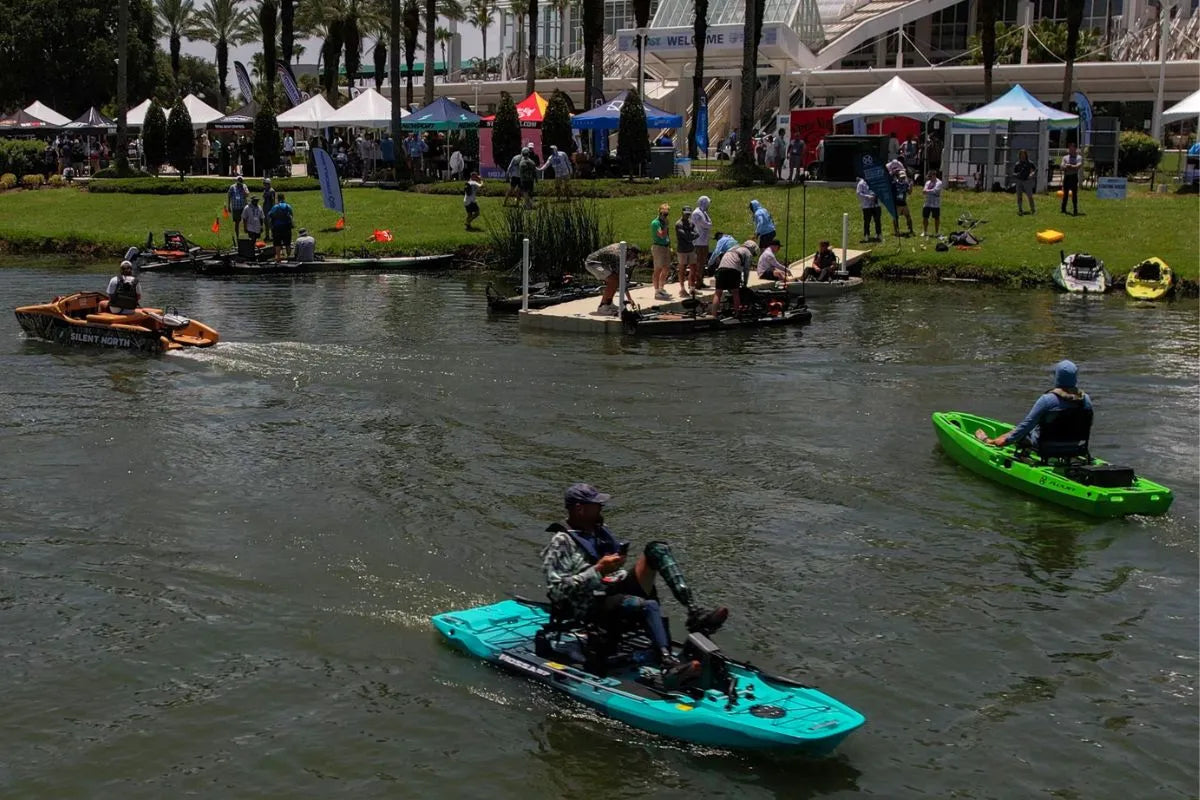
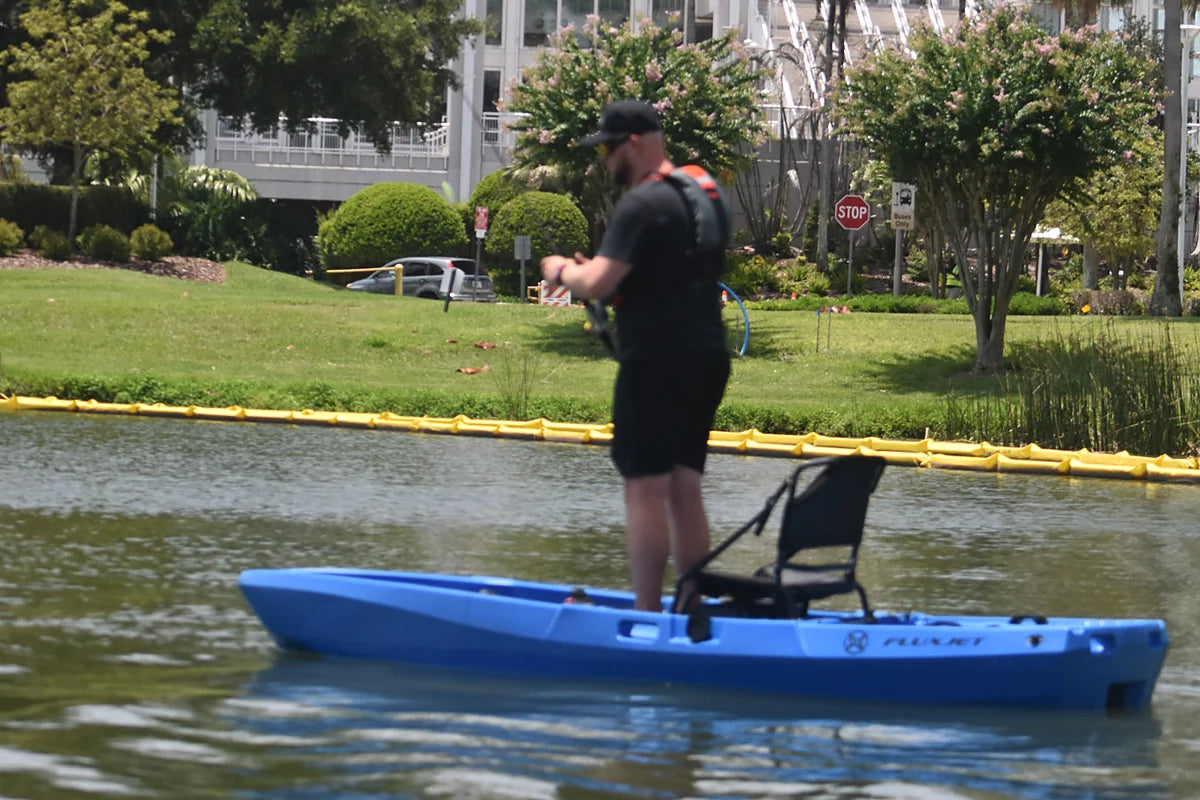
Pedal drives
You pedal, and a drive under the kayak turns that into thrust, with either flapping fins or a propeller. The best-known example is Hobie's MirageDrive. Hobie's Kick-Up Fins retract automatically when they hit an obstacle and drop back down once they're clear, and the MirageDrive 360 rotates so you can push the kayak in any direction.
Because the drive sits below the hull, shallow or weedy water usually means pulling the drive up and paddling.
Electric drives
A battery powers the motor, and you control speed with a throttle or remote. Most electric kayaks use a trolling motor with a propeller below the hull, mounted at the bow, stern or in a drive well.
A jet drive is different: the FluxJet's impeller sits inside the hull, water leaves through a steerable nozzle at the stern, and nothing hangs below the boat. See how a jet drive works.
Side by side
Pedal vs electric at a glance
| Question | Pedal drive | Electric trolling motor | FluxJet electric jet |
|---|---|---|---|
| What powers it? | Your legs | Battery | Battery, your choice from 12V to 60V. Or paddle when you want. |
| Effort over a long day | You do the work | Low | Low, or as much as you like: paddle for exercise and use the motor when you want |
| Shallow water | Drive sits below the hull. Some fins retract on impact. | Prop sits below the hull. Usually lifts or tilts. | Nothing below the hull. Runs in about 4 inches. |
| Weeds | Fins or prop can foul | Exposed prop can wrap | No exposed prop. Weeds can still collect on the intake: slow down and use reverse to help clear it. |
| Position holding | Pedal to hold. Some drives rotate or reverse. | GPS anchoring on select models | Not built in. Use a stake-out pole or anchor. |
| Charging | None | Charge the battery | Charge the battery |
Swipe the table sideways on a phone. FluxJet's 4-inch running depth is FluxJet's own spec. Pedal and trolling motor features vary by brand and model.
Best of both?
Hybrids and add-on motors
Pedal kayaks with electric assist
Some pedal kayaks now add a motor. Hobie sells the evolve electric motor kit, which can supplement or replace pedaling. In Hobie's own test on a Mirage Revolution 13 it reached 5.8 mph at full power for about 48 minutes, or 2.6 mph for over 8 hours at slow speed. The VoyaX Mossa is a pedal-electric hybrid with a built-in drive. Compare FluxJet vs VoyaX Mossa.
Strap-on and trolling motors
If you already own a kayak, you can add a trolling motor or a strap-on motor. It's the cheaper path in, with a prop below the hull. Jet drive vs trolling motor and FluxJet vs PacMotor cover the trade-offs.
Where FluxJet fits
Electric, with nothing below the hull
The FluxJet is pure electric: no pedals and no exposed prop. You set your speed with a side-mounted throttle dial and steer with foot pedals, so your hands stay free for the rod. Because the jet drive is built into the hull, it runs in about 4 inches of water, where pedal fins and props have to come up.
Think of it like an e-bike. You can paddle the FluxJet like any kayak for exercise or to save battery, and use the motor when you want to cover water. Paddle holders are included, and we always recommend carrying a paddle. If pedaling is the workout you're after, a pedal kayak is the better fit, and we'll tell you so.
Questions
Electric vs pedal FAQ
Is a pedal kayak or an electric kayak faster?
Can a pedal drive fish shallow water?
Is pedaling hands-free?
Can I paddle a FluxJet?
Do I need to register an electric kayak?
Can I add a motor to my pedal kayak later?
Want to talk it through?
Call the team that builds every FluxJet. We'll give you a straight answer, even when another kayak is the better fit.