
Comparisons / Old Town AutoPilot 120
Head-to-head comparison
FluxJet vs Old Town Sportsman AutoPilot 120
The Old Town Sportsman AutoPilot 120 is one of the most respected motorized fishing kayaks on the water. Its Minn Kota motor and GPS Spot-Lock are proven, and you'll find it in kayak shops across the country. For anglers who hold position over deep structure, it's the conventional answer.
The FluxJet is a different kind of kayak: the world's first electric jet-powered fishing kayak and the ICAST 2025 Best of Show winner, built for water a trolling motor struggles to reach. Old Town wins where Old Town wins, and FluxJet wins where FluxJet wins. Here's how to make the right call for the way you fish.
The 30-second verdict
Which one should you pick?
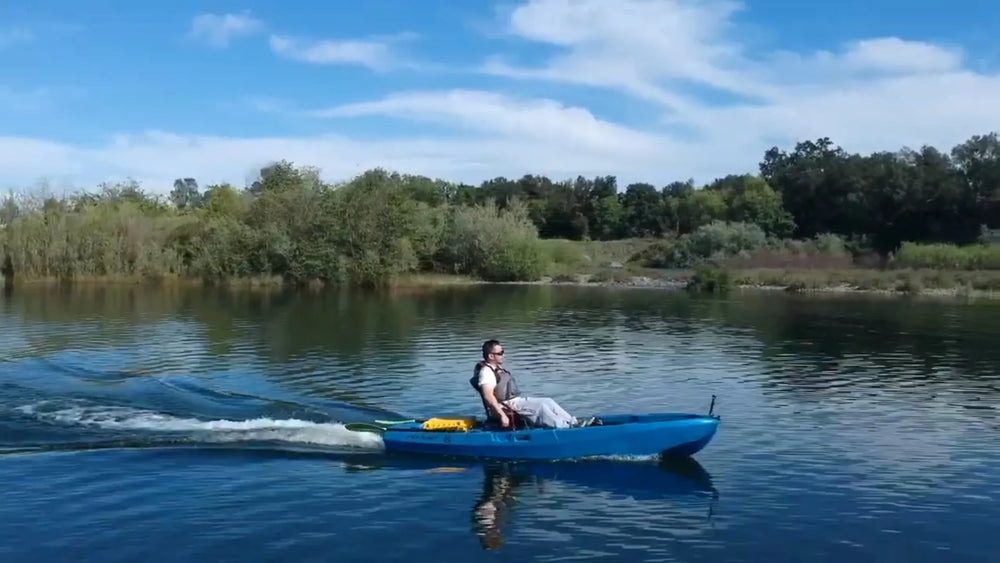
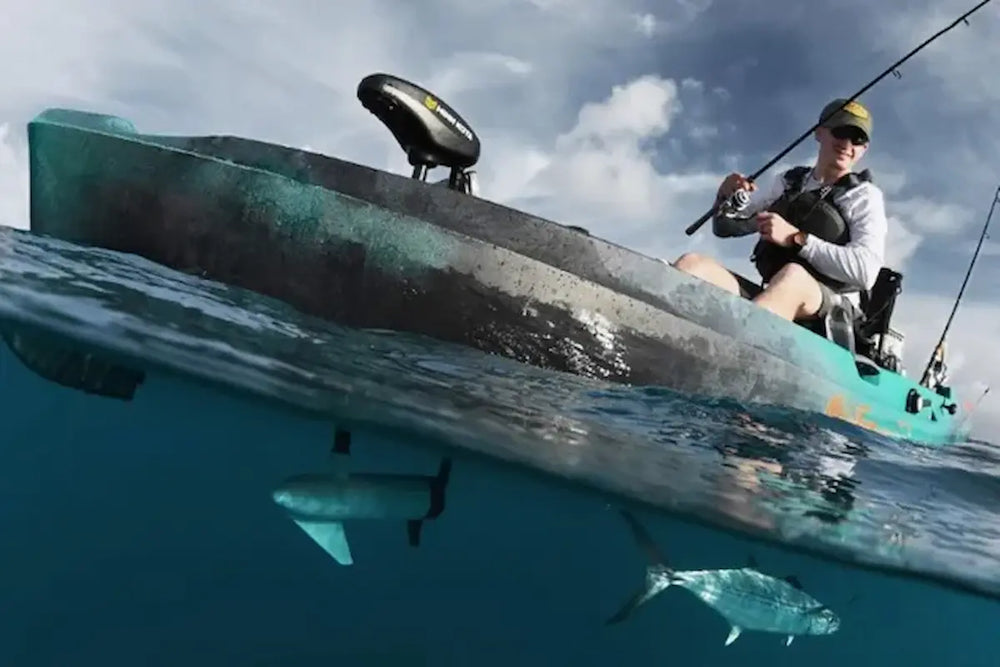
Choose FluxJet if you fish
- Skinny water: FluxJet runs in about 4 inches with nothing hanging below the hull
- Weed beds, where an exposed prop wraps
- Spots where a lighter kayak matters: 122 lb rigged vs 152 lb, both before battery
- With your own choice of battery, from 12V to 60V
- On a budget: $3,499 vs $4,499.99
Choose the Old Town AutoPilot 120 if you
- Need GPS Spot-Lock to hold position over structure
- Fish mostly deeper, open water
- Want a kayak you can see in shops across the country
- Already know and like Old Town's layout and rigging
Side by side
FluxJet vs AutoPilot 120 specs
| Spec | FluxJet | Old Town AutoPilot 120 |
|---|---|---|
| Propulsion | Patented electric jet drive built into the hull. No exposed prop. | Minn Kota 45 lb thrust 12V motor with lift-assist |
| Shallow water | Runs in about 4 inches. Nothing hangs below the hull. | Motor sits below the hull. Lift-assist raises it for shallow water. |
| Length and width | 11 ft (132") x 35" | 12 ft x 37" |
| Weight, without battery | 122 lb rigged | 152 lb assembled, including the motor console |
| Capacity | 400 lb | 406 lb usable (558 lb total, including the boat) |
| Top speed | 6+ mph | Not published by Old Town |
| Battery | Your choice of 12V to 60V marine battery (not included) | 12V Group 27 or smaller deep cycle battery (not included) |
| Position holding | Not built in | GPS Spot-Lock |
| Steering | Foot pedals steer the rear nozzle | Motor plus rudder, controlled with adjustable foot braces |
| Price | $3,499 ($999 deposit, then $2,500) plus shipping and tax | $4,499.99 |
Swipe the table sideways on a phone. FluxJet's 4-inch running depth is FluxJet's own spec. AutoPilot 120 figures are from Old Town's website, checked October 2026.
Where each one wins
Honest strengths on both sides
Where the Old Town wins
- GPS Spot-Lock
- Spot-Lock holds you in position against wind and current, hands free. If your fishing depends on sitting on a brush pile or current edge, that's a real advantage. FluxJet doesn't have a built-in equivalent.
- Shops nationwide
- Old Town is sold by dealers across the country, so it's easy to see one in person and get service locally.
- Familiar layout
- If you've owned an Old Town before, the layout, accessories and rigging are known territory. Familiarity is real value.
Where FluxJet wins
- Shallow water
- FluxJet runs in about 4 inches with nothing below the hull. Water where you'd have to lift a trolling motor is where FluxJet is at its best.
- Weeds
- No exposed prop to wrap. The intake can still pick up weeds: slow down in thick vegetation and use reverse to help clear it.
- Lighter to load
- 122 lb rigged vs 152 lb for the AutoPilot, both before the battery. That's 30 lb less every time you load up.
- Speed and battery choice
- 6+ mph, and you choose your battery from 12V to 60V: lighter for short trips, bigger for long days. See our battery guide.
- Price
- $3,499 vs $4,499.99 for the AutoPilot 120.
Real-world fishing
Which one fits your water?
The honest verdict
Pick the one that fits your water
If your water is consistently deep, you fish open structure, and Spot-Lock is non-negotiable, the AutoPilot 120 is the more proven choice.
If you fish skinny water or weedy flats, want a lighter kayak to load, and want to pick your own battery, the FluxJet is the better fit, and it costs less.
Questions
FluxJet vs AutoPilot 120 FAQ
Which one runs in shallower water?
Which one is lighter?
Can I get Spot-Lock on a FluxJet?
Does the AutoPilot still make sense if I never fish shallow water?
Can both be used in salt water?
Still deciding? Talk it through with us.
Call the team that builds every FluxJet. We'll answer honestly, even when the other kayak is the better fit.