
Buyer's Guide / Shallow water kayak
Buying guide
Shallow Water Fishing Kayak: What to Look For in Skinny Water
The best fish often hold where most boats can't reach: flats, creek mouths, lily pads and backwaters a few inches deep. Getting there on a kayak comes down to one thing: what hangs below your hull.
Here is what to look for in a shallow water fishing kayak, and how to fish skinny water without damaging your drive.
The short answer
What makes a kayak good in shallow water
Drive by drive
How each kind of kayak handles skinny water
| Propulsion | In shallow water | What you do |
|---|---|---|
| Paddle | Nothing below the hull | Paddle or push-pole. Slow, but goes almost anywhere. |
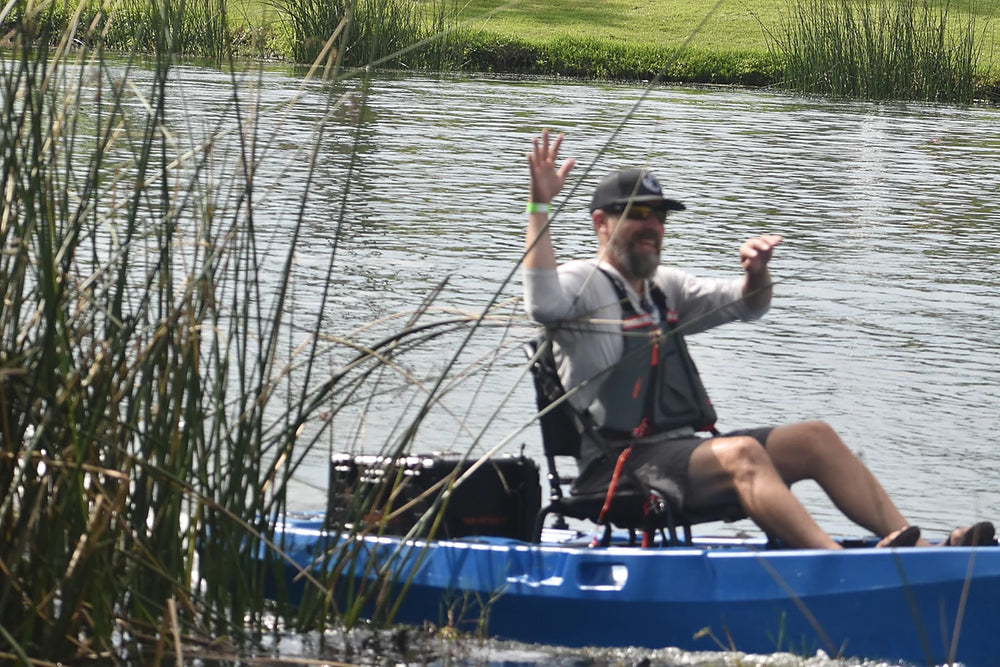
| Pedal drive | Fins or prop sit below the hull. Some fins retract on impact. | Pull the drive up and paddle through the shallows. |
| Trolling motor | Prop sits below the hull | Lift or tilt the motor, then paddle or pole. |
| Gas jet | Engine-powered jet | Fast, but heavy, and some waters don't allow gas motors. |
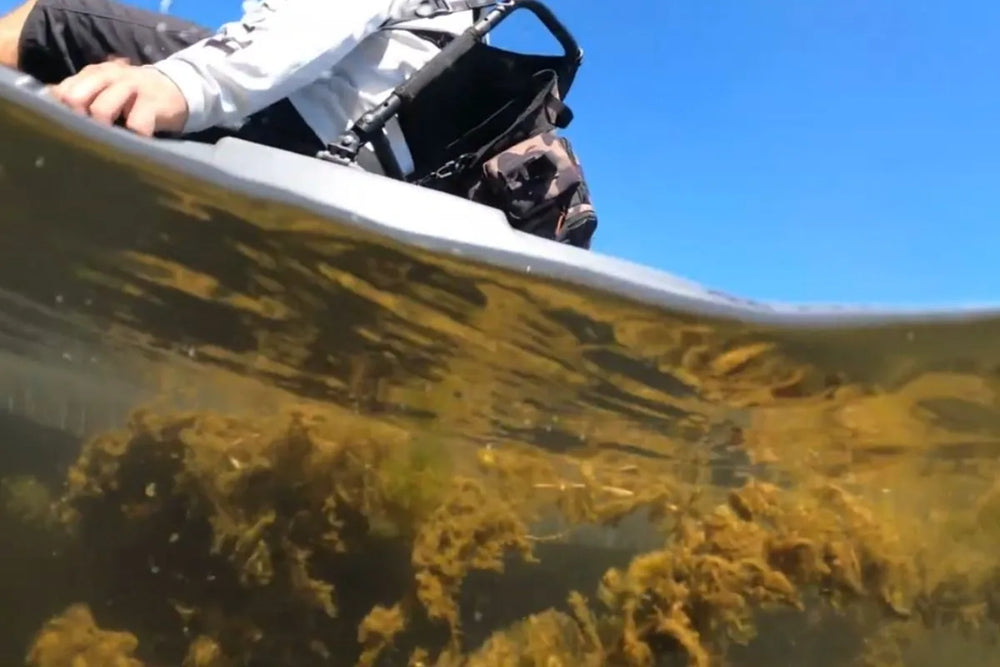
| FluxJet electric jet | Nothing below the hull. Runs in about 4 inches. | Keep motoring, slowly and with care, or paddle. See the tips below. |
Swipe the table sideways on a phone. FluxJet's 4-inch running depth is FluxJet's own spec.
On the water
Tips for fishing skinny water
Read the water
Check tides and water levels before you go. A flat that fishes well on the incoming tide can leave you dragging on the outgoing one, so plan your way back.
Slow down
Go slow over unknown bottom and around weeds. You'll spot fish, structure and hazards sooner, and you'll protect your drive.
Launch smart
Launch where there's enough water to float the kayak with its drive in the water. With a FluxJet, the intake should be fully submerged before you start the drive.
Mind sand and gravel
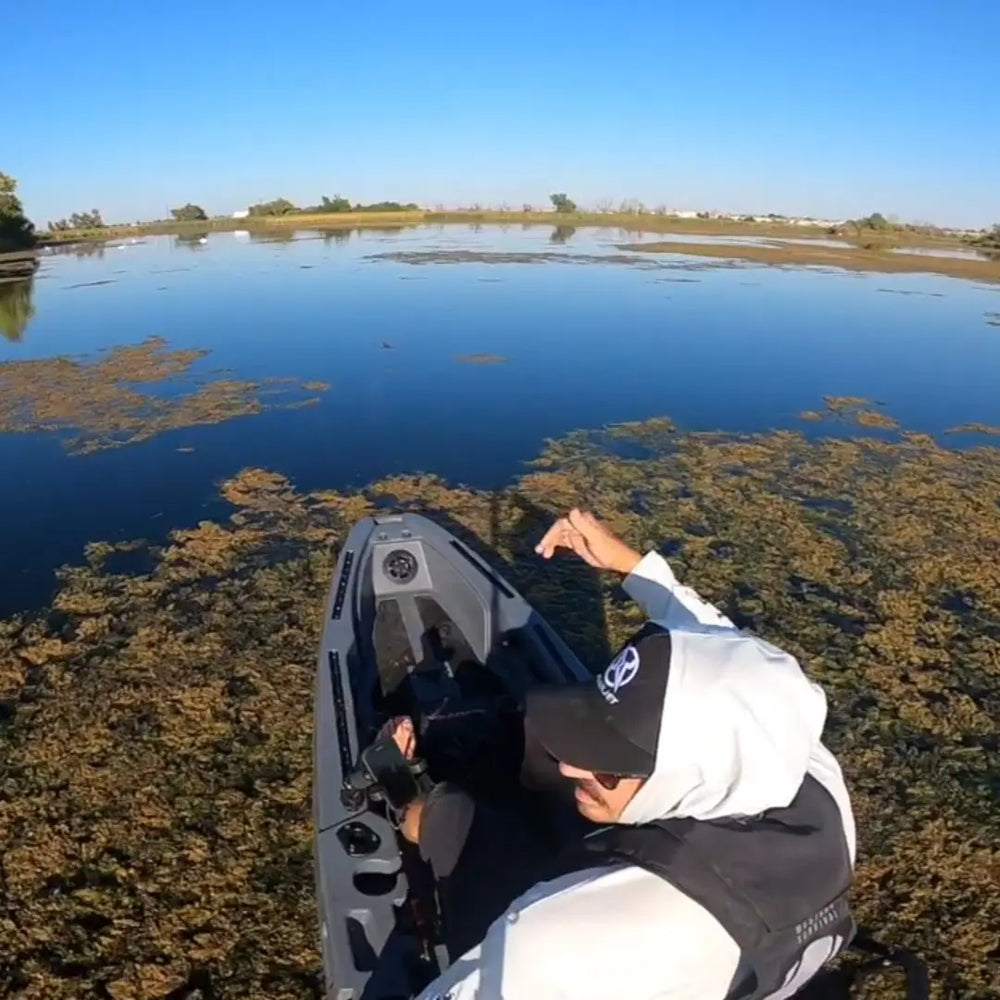
No drive is foolproof. With a FluxJet, avoid running where sand, gravel or small rocks can be pulled into the intake: they can damage the drive. In thick weeds, slow down and use reverse to help clear the intake.
Balance your weight
In very shallow water, keeping weight toward the rear helps keep the intake in the water. Depending on the rider, you may need to shift weight back. Your Owner's Manual covers this.
Built for skinny water
Why the FluxJet runs shallow
The FluxJet's jet drive is built into the hull. Water comes in through an intake on the bottom near the stern and leaves through a nozzle flush with the back of the boat, so there's no prop, shaft or fin below the hull. That lets it run in about 4 inches of water, where you'd normally lift a motor or pedal drive. It's at home in deep water too.
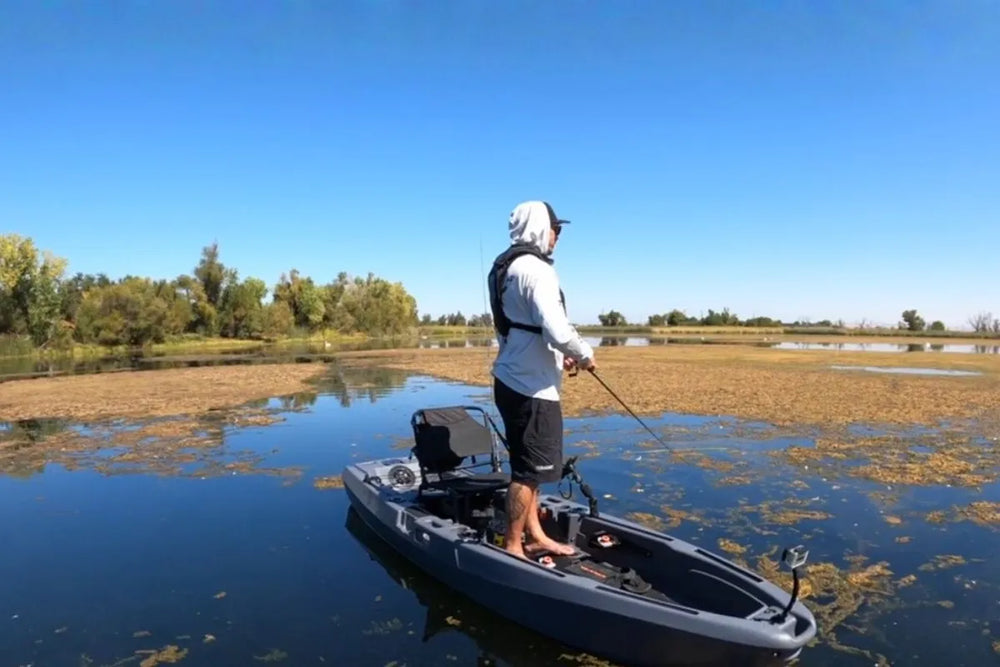
The hull is 35 inches wide with a 400 lb capacity, so you can stand and sight-fish, and foot-pedal steering leaves your hands free. You can also paddle it like any kayak when you want to ease into a spot, and we always recommend carrying a paddle.
Questions
Shallow water kayak FAQ
How shallow can the FluxJet go?
Can a pedal kayak fish shallow water?
What is the best way to stop on a flat?
Can I use the FluxJet in deep water too?
Will weeds stop a FluxJet?
Want to talk it through?
Call the team that builds every FluxJet. We'll give you a straight answer, even when another kayak is the better fit.